
One of the first questions people ask after being injured in a car accident is, “How long will my personal injury claim take?” It’s an understandable concern. Medical bills begin arriving, time away from work affects your income, and the uncertainty of waiting for an insurance company to respond can be frustrating.
While everyone hopes for a quick resolution, there is no single timeline that applies to every case. Some claims are resolved within a few months, while others take a year or more depending on the severity of the injuries, the complexity of the accident, insurance negotiations, and whether a lawsuit becomes necessary.
Although waiting can feel stressful, settling too quickly isn’t always in your best interest. Accepting compensation before you fully understand your injuries or future medical needs could leave you paying expenses out of your own pocket later.
This guide explains every stage of a personal injury claim, the factors that affect how long the process takes, and what you can do to help your case move forward while protecting your right to fair compensation.
Table of Contents
Important Note
It can be tempting to accept the first settlement offer simply to move on. However, many serious injuries require weeks or months before doctors fully understand the long-term effects. Waiting until your condition is properly evaluated often results in a more accurate assessment of your damages and helps protect your future.
What Is the Average Timeline for a Personal Injury Claim?
Every accident is different, but most personal injury claims follow a similar sequence of events. Some straightforward claims involving minor injuries and clear liability may settle within three to six months. More complex cases involving severe injuries, disputed fault, multiple parties, or ongoing medical treatment can take a year or considerably longer.
Rather than asking how long claims take on average, a better question is:
“What factors determine how long my specific case will take?”
The answer depends on the unique facts of your claim. Your medical recovery, the amount of available evidence, the insurance company’s response, and whether litigation becomes necessary all influence the overall timeline.
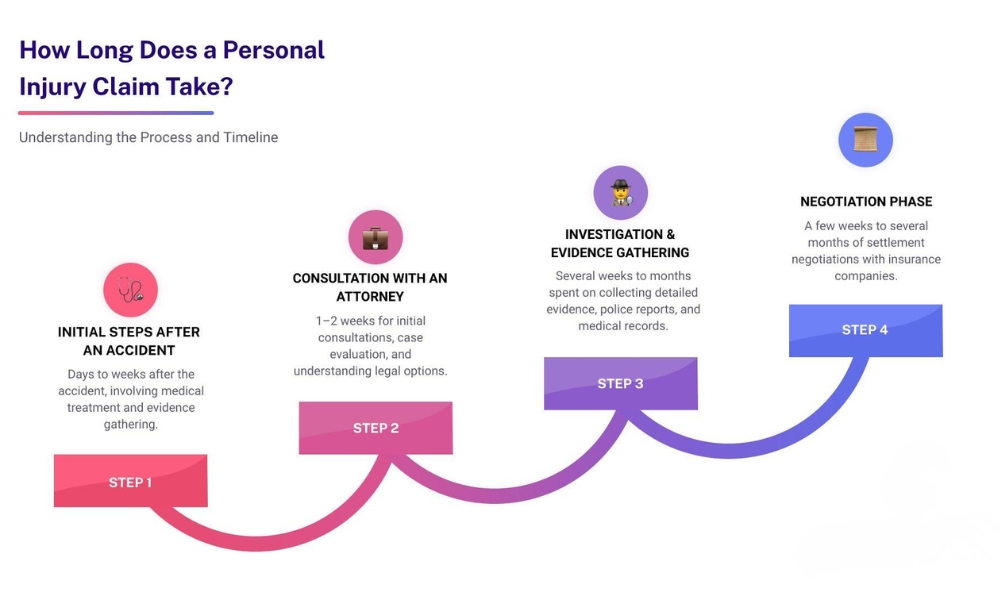
The Six Stages of a Personal Injury Claim
Although every case is unique, most injury claims move through several predictable stages. Understanding each phase helps set realistic expectations and reduces uncertainty during the process.
Stage 1: Medical Treatment and Recovery
Your health should always come first.
Immediately after an accident, your primary focus should be obtaining appropriate medical care. Emergency treatment, diagnostic testing, specialist appointments, physical therapy, and follow-up care not only support your recovery but also create important medical documentation for your claim.
Many attorneys recommend waiting until you’ve either completed treatment or reached what physicians call Maximum Medical Improvement (MMI) before negotiating a final settlement. At that point, your doctors have a clearer understanding of your long-term condition, future treatment needs, and permanent limitations, if any.
Settling before reaching MMI may result in accepting compensation that doesn’t fully account for future medical expenses.
Stage 2: Investigation and Evidence Collection
While you’re recovering, evidence begins to shape your claim.
Your attorney or the insurance company may collect police reports, photographs, surveillance footage, witness statements, medical records, repair estimates, employment records, and other documentation needed to establish liability and calculate damages.
In straightforward accidents, this process may move quickly. More complicated collisions involving multiple vehicles, commercial trucks, or disputed liability often require additional investigation.
| Stage | Purpose |
|---|---|
| Medical Treatment | Diagnose injuries and document recovery. |
| Evidence Collection | Gather records, witness statements, photos, and reports. |
| Demand Package | Present damages and request compensation. |
| Negotiation | Attempt to reach a fair settlement. |
| Litigation (if needed) | Resolve disputes through the court process. |
Stage 3: Sending the Demand Letter
Once your injuries, expenses, and future medical needs are reasonably understood, your attorney typically prepares a demand package for the insurance company.
This package summarizes the facts of the accident, explains why the other party is legally responsible, outlines your injuries and financial losses, and requests compensation. Supporting documents such as medical records, bills, wage loss documentation, photographs, and expert opinions are often included.
The demand letter begins the formal negotiation process.
Why Some Personal Injury Claims Take Longer Than Others
One of the biggest misconceptions is that every claim follows the same schedule. In reality, many factors can significantly extend—or shorten—the timeline.
Cases involving serious injuries generally require more time because doctors need to understand the full extent of the injuries before damages can be accurately calculated. Ongoing treatment, surgery, or rehabilitation may delay settlement discussions, but they also provide a clearer picture of future medical needs.
Disputed liability is another common reason for delays. If the insurance company argues that you were partially responsible for the accident, additional investigation may be necessary before negotiations can move forward.
Claims involving multiple insurance companies, commercial vehicles, catastrophic injuries, or complex legal issues often require additional documentation and expert analysis, increasing the overall timeline.
Important Note
A longer claim isn’t always a bad sign. Sometimes additional time allows your attorney to gather stronger evidence, complete medical treatment, accurately calculate future damages, and negotiate from a much stronger position. Rushing a settlement simply to finish the process can sometimes result in significantly lower compensation.
Settlement Negotiations: How Long Do They Usually Take?
After the insurance company receives your demand package, the negotiation phase begins. This is often where many people expect an immediate answer, but settlements rarely happen overnight.
The insurance adjuster will review medical records, accident reports, photographs, witness statements, repair estimates, and any other supporting documentation before determining how to respond. Depending on the complexity of the claim, this review process may take several weeks.
In many cases, the first settlement offer is lower than the amount requested. This doesn’t necessarily mean negotiations have failed. Instead, it often marks the beginning of discussions between your attorney and the insurance company.
Several rounds of negotiation may occur before both sides reach an agreement. Throughout this process, your attorney can present additional evidence, explain future medical needs, address disputed issues, and advocate for compensation that more accurately reflects the impact the accident has had on your life.

When Will I Actually Receive My Settlement Check?
Even after a settlement agreement is reached, payment is not usually issued the same day.
Once both parties accept the settlement terms, several administrative steps generally take place. Settlement documents must be prepared and signed, insurance companies process payment, and any outstanding medical liens or legal obligations may need to be addressed before funds are distributed.
Although every case is different, many clients receive their settlement proceeds within several weeks after all required documents have been completed and the insurance company issues payment.
Your attorney can explain the expected timeline for your specific case and keep you informed throughout the process.
What Can Delay a Personal Injury Settlement?
Some delays are unavoidable, while others can be minimized with proper preparation. Understanding what commonly slows the process helps set realistic expectations.
One of the biggest reasons for delays is ongoing medical treatment. While waiting may feel frustrating, completing treatment often allows your attorney to calculate the full value of your claim, including future medical expenses and long-term limitations.
Disagreements over fault may also extend negotiations. If the insurance company believes you were partially responsible for the accident, additional investigation, witness interviews, or expert analysis may be required before the claim can be resolved.
Incomplete medical records, missing documentation, multiple insurance policies, catastrophic injuries, and disputes regarding future medical care may also increase the overall timeline.
| Common Delay | Reason |
|---|---|
| Ongoing medical treatment | Future damages cannot yet be fully calculated. |
| Disputed liability | Additional investigation and evidence may be required. |
| Multiple parties | Several insurance companies may become involved. |
| Serious injuries | Long-term medical evaluations take additional time. |
| Litigation | Court scheduling significantly extends the timeline. |
What Happens If a Lawsuit Becomes Necessary?
Fortunately, many personal injury claims settle without going to trial. However, when the insurance company disputes liability or refuses to offer fair compensation, filing a lawsuit may become the best option.
Filing a lawsuit does not necessarily mean your case will end up before a jury. In fact, many lawsuits still resolve through settlement before trial. The litigation process simply provides another avenue for resolving disputes when negotiations alone are unsuccessful.
After a lawsuit is filed, both sides typically exchange evidence through a process known as discovery. This may include written questions, document requests, depositions, expert witness reports, and independent medical evaluations when appropriate.
Courts also establish scheduling deadlines that both parties must follow. Depending on the complexity of the case and the court’s calendar, litigation can extend the overall timeline considerably.
Important Note
Hearing that a lawsuit has been filed can sound intimidating, but it doesn’t necessarily mean you’ll spend days in court. Many personal injury cases continue to settle during litigation as additional evidence becomes available and both sides evaluate the strengths of the case.
Can You Speed Up a Personal Injury Claim?
While no one can control every aspect of the legal process, there are several steps that may help your claim move forward more efficiently.
Seeking prompt medical care and following your physician’s treatment recommendations helps establish a clear medical record. Keeping copies of medical bills, receipts, employment records, and repair estimates also allows your attorney to prepare your claim more efficiently.
Responding quickly when your attorney requests documents or information can prevent unnecessary delays. If additional medical treatment becomes necessary, informing your legal team promptly helps ensure your claim remains accurate and up to date.
Patience also plays an important role. While everyone hopes for a quick resolution, allowing enough time to fully understand your injuries often results in a stronger claim than accepting the first available offer.
Can a Personal Injury Attorney Help the Process Move More Smoothly?
Although an attorney cannot control insurance company decisions or court schedules, experienced legal representation often helps prevent avoidable delays and keeps your claim progressing efficiently.
Your attorney can coordinate medical records, gather supporting evidence, communicate directly with insurance adjusters, monitor deadlines, negotiate settlement offers, and prepare your case for litigation if necessary.
Perhaps just as importantly, an attorney helps ensure that your claim is valued based on its true merits rather than the insurance company’s initial assessment.
At The Law Office of Karen Torres PLLC, we work closely with injured clients throughout Houston, providing regular updates, answering questions, and pursuing fair compensation while allowing clients to focus on their recovery.
Learn more about our Motor Vehicle Accident Claims, Catastrophic Injury & Wrongful Death, and our complete Personal Injury services.
How Can You Help Protect Your Personal Injury Claim?
Although many parts of the claims process are outside your control, there are several practical steps you can take to help protect your case and avoid unnecessary delays. Staying organized, following your treatment plan, and maintaining open communication with your attorney can make a meaningful difference as your claim progresses.
Keep copies of medical bills, prescriptions, repair estimates, receipts, and any correspondence from insurance companies. If your injuries prevent you from working, retain documentation showing lost wages or reduced earning capacity. These records help demonstrate the financial impact the accident has had on your life.
It’s also important to attend scheduled medical appointments and follow your healthcare provider’s recommendations. Gaps in treatment may create questions about the seriousness of your injuries or whether they were related to the accident.
Finally, avoid discussing your case publicly or posting accident-related updates on social media. Insurance companies sometimes review publicly available information while evaluating injury claims.
Need Help With a Personal Injury Claim in Houston?
If you’ve been injured in a car accident, understanding the claims process is only the first step. Attorney Karen Torres provides compassionate, personalized legal representation for accident victims throughout Houston, helping clients navigate insurance negotiations while pursuing the compensation they deserve.
Whether your case is just beginning or you’ve already received a settlement offer, our team can explain your legal options, answer your questions, and advocate for your best interests every step of the way.
Schedule your confidential case evaluation today to discuss your accident and your potential injury claim.
Frequently Asked Questions
How long does a personal injury claim usually take?
Every claim is different. Straightforward cases involving minor injuries may settle within a few months, while claims involving serious injuries, disputed liability, or litigation can take a year or longer. The timeline depends on the facts of your case, your medical recovery, and the insurance company’s response.
When will I receive my settlement?
After a settlement agreement is reached, payment is typically issued after settlement documents are signed and the insurance company completes its processing. Depending on the circumstances, additional time may be needed to resolve medical liens or other obligations before funds are distributed.
Why does my injury claim seem to be taking so long?
Several factors may extend the timeline, including ongoing medical treatment, disputes over fault, complex injuries, multiple insurance companies, or the need to file a lawsuit. While delays can be frustrating, they sometimes allow for a more complete evaluation of your damages.
Should I accept the first settlement offer?
Not necessarily. Initial offers may not fully account for future medical expenses, lost earning capacity, or long-term pain and suffering. Before accepting any offer, it’s important to understand the full value of your claim.
Can filing a lawsuit delay my settlement?
Yes. Litigation generally increases the overall timeline because the case must move through court procedures such as discovery, motions, and scheduling. However, many lawsuits still settle before reaching trial.
Can an attorney speed up my personal injury claim?
An attorney cannot control insurance company decisions or court calendars, but experienced legal representation can help avoid unnecessary delays by gathering evidence efficiently, communicating with insurers, monitoring deadlines, and preparing a well-supported claim.
What happens if I need additional medical treatment after my claim begins?
Additional treatment may affect the value and timing of your claim. It’s important to keep your attorney informed so your damages accurately reflect your ongoing medical needs.
When should I contact a personal injury lawyer?
It’s generally beneficial to speak with an attorney soon after an accident, especially if you’ve suffered injuries, liability is disputed, or you’re unsure whether a settlement offer fairly compensates you for your losses.
Final Thoughts
Recovering from a serious accident takes time, and so does building a strong personal injury claim. While it’s natural to want a quick settlement, resolving a case before your injuries are fully understood can leave you facing future expenses that are no longer recoverable.
Understanding each stage of the claims process—from medical treatment and investigation to negotiations and, when necessary, litigation—can help you make informed decisions and set realistic expectations. Every claim follows its own timeline, but careful preparation, complete documentation, and experienced legal guidance often contribute to a stronger outcome.
If you have questions about your accident or would like to discuss your legal options, visit our Frequently Asked Questions, explore our Personal Injury Services, or contact The Law Office of Karen Torres PLLC to schedule a confidential consultation.
Legal Disclaimer
This article is provided for general informational purposes only and should not be considered legal advice. Reading this content does not create an attorney-client relationship. Every personal injury claim is unique, and timelines vary based on the facts of each case and applicable Texas law. If you need legal advice regarding your situation, consult a qualified attorney.